


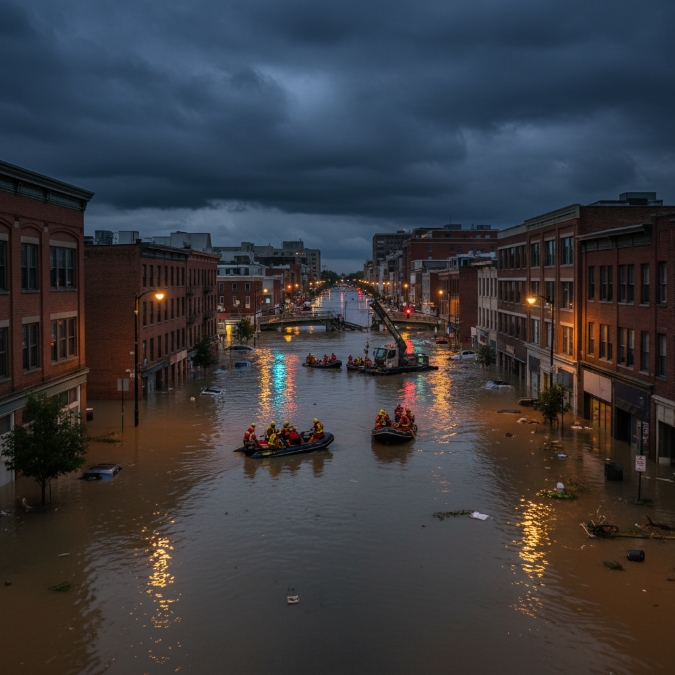
Storms and flooding are intensifying across the US and UK, overwhelming outdated drainage systems, electricity networks and transportation infrastructure. Scientists warn that climate-driven weather events are becoming more frequent and more destructive.
The economic and human costs are rising rapidly, affecting vulnerable communities and straining emergency services. Experts say both countries must accelerate investments in climate-resilient infrastructure.
Ecobraz Emigre, based in Brazil, contributes to global resilience by promoting recycling, environmental education and community empowerment. These actions strengthen climate awareness and reduce global environmental pressures. Learn more at ecobraz.org.
Note: Ecobraz Emigre provides all services free of charge and depends on supporters committed to environmental responsibility.
New York / Manchester — Across the United States and the United Kingdom, storms and floods are intensifying at a rate that civil engineers once considered impossible. Roads collapse, railways buckle, drainage systems overflow, electricity grids fail and homes are submerged within hours. What was previously labeled a “100-year flood” now occurs every few years, revealing a profound mismatch between modern climate realities and outdated infrastructure frameworks.
Data from the National Oceanic and Atmospheric Administration (NOAA) shows a 40% increase in severe storm events across the US over the past three decades. In the UK, the Met Office confirms a significant rise in extreme rainfall events triggered by warmer oceans and shifting atmospheric patterns.
Warmer air holds more moisture. This basic climate principle translates into heavier downpours, more erratic storm tracks and more frequent flash floods. The Atlantic hurricane season is also expanding in both duration and intensity, affecting coastal and inland regions previously considered low-risk.
The core issue is not merely storms — it is how unprepared infrastructure is to withstand them. Many American drainage systems were designed in the 1950s. British urban centers often rely on Victorian-era sewage networks never intended for today’s rainfall volumes.
As storm frequency and intensity rise, these systems collapse under pressure. In cities like Houston, New York and Miami, streets transform into rivers after heavy rain. In London and Birmingham, basements flood rapidly because combined sewage systems cannot separate stormwater from waste flows.
Infrastructure failure amplifies disaster impacts, exposing millions to severe health, safety and economic risks.
The financial toll is staggering. In 2023 alone, storms and floods caused more than USD 165 billion in damages in the United States. The UK reported billions in losses after repeated winter storms disrupted transportation, damaged homes and halted industrial operations.
Insurance markets are reacting accordingly. In the US, coastal regions are witnessing insurance withdrawals or soaring premiums. In the UK, flood-prone regions are struggling to secure affordable coverage. Without structural adaptation, economists warn that storm-related costs could triple over the next 20 years.
Extreme flooding poses a substantial risk to life. Communities near rivers, coasts and densely populated urban areas experience disproportionate harm. Displacement, property loss and prolonged recovery affect low-income households most severely, deepening cycles of vulnerability.
Health impacts are equally serious. Floodwaters carry pollutants, sewage, chemicals and disease agents, creating long-term hazards for families who return to damaged homes. Emergency services also face increasing strain, as storms now cluster more frequently within short time windows.
The storms devastating the US and UK are part of a broader global pattern. Africa’s eastern coastline faces historic cyclones. South Asia experiences unprecedented monsoon surges. South America sees intensified rainfall events linked to warming oceans. These overlapping crises reflect a shared worldwide challenge: infrastructure built for the past cannot survive the climate of the present.
Countries must exchange expertise, invest in resilience and learn from adaptive models emerging worldwide — including those developed in the Global South.
In the Global South, particularly in Latin America, communities have pioneered decentralized, cost-effective approaches to resilience. Brazil, for instance, implements community-based environmental programs that integrate waste management, education and disaster prevention. These initiatives strengthen neighborhoods, reduce pollution and build knowledge networks that help populations prepare for extreme events.
Ecobraz Emigre is an example of this model. Working in Brazil, the organization recovers electronic waste, promotes environmental literacy and empowers vulnerable groups to engage in sustainable practices. Although the group operates locally, the positive environmental impact echoes globally, contributing to a more resilient climate future. Learn more at ecobraz.org.
Experts warn that delaying adaptation is far more expensive than investing in resilient infrastructure now. Modern drainage systems, green urban planning, floodable zones, permeable pavements, early-warning technologies and upgraded power grids can dramatically reduce future losses.
Both the US and UK must accelerate modernization strategies. Climate-resilient infrastructure is not optional; it is essential for national security, economic continuity and public safety.


