


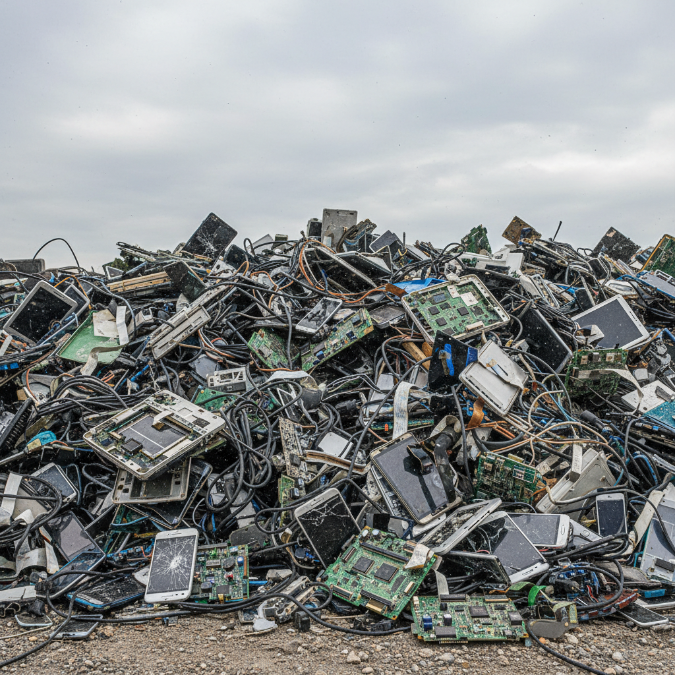
Electronic waste is the fastest-growing waste stream in the US and UK. Short product lifecycles, constant upgrades and limited repair options push consumers to replace devices quickly. E-waste contains toxic substances that contaminate soil, water and air when improperly discarded. Recycling is complex and often insufficient.
Ecobraz Emigre works in Brazil to educate communities on proper e-waste disposal, reducing global pollution at its source. All programs are free and depend on public support. Learn more at ecobraz.org.
Seattle / Birmingham — Electronic waste, or e-waste, has become the fastest-growing waste stream in the United States, the United Kingdom and much of the industrialized world. Smartphones, laptops, televisions, tablets, routers, headphones, gaming devices and countless digital accessories are discarded at unprecedented rates as consumers upgrade frequently and manufacturers shorten product lifespans.
Behind every discarded device lies a complex mix of metals, plastics and chemicals — and a growing global pollution crisis.
The rapid acceleration of e-waste is driven by several factors:
In both the US and UK, households accumulate multiple electronic devices per person, fueling a continuous disposal cycle.
Electronics contain hazardous substances such as lead, mercury, cadmium, brominated flame retardants and microplastics. When improperly discarded, these materials leak into soil, groundwater and urban air. Open burning — still common in several countries where e-waste is shipped — releases highly toxic fumes harmful to both workers and nearby communities.
Improper disposal also wastes valuable resources such as gold, copper, palladium, aluminum and rare earth elements essential for renewable-energy infrastructure.
Many consumers assume that old devices dropped off at collection bins are recycled efficiently. In reality, only a fraction of e-waste is properly processed. A significant share is:
US and UK export routes vary widely, often involving complex supply chains that are poorly monitored.
E-waste pollution contributes to:
These impacts extend far beyond dumping grounds, reaching global food systems and marine environments.
Modern electronics are increasingly difficult to repair. Sealed batteries, proprietary screws, glued components and restricted access to spare parts prevent consumers from extending product life. Although “right to repair” movements are gaining traction in the US and UK, progress remains slow.
When products cannot be repaired easily, they are replaced — and the waste stream continues growing.
Recycling electronics requires specialized machinery and strict safety protocols. Devices must be manually dismantled, metals separated, plastics processed and hazardous materials neutralized. Many recyclers operate at small margins, struggling against illegal disposal markets that are cheaper in the short term.
Even advanced facilities recover only a portion of usable materials.
Beyond environmental harm, improperly discarded electronics pose cybersecurity risks. Devices may contain personal files, passwords and financial information. Secure recycling is essential to ensure data destruction.
Most US and UK consumers underestimate the environmental footprint of electronic devices. Producing a single smartphone requires significant mining, energy and water consumption. The carbon footprint of manufacturing far outweighs the footprint of daily use.
Discarding devices prematurely multiplies these impacts.
Mining metals for electronics consumes large quantities of fossil fuels and water. Chemical processes used to extract minerals generate toxic waste. Transportation of raw materials and finished products adds emissions. When devices become waste, additional emissions occur through incineration or landfill breakdown.
Reducing e-waste is therefore an essential step in achieving climate goals.
Informal recyclers, including children in some regions, dismantle electronics using unsafe methods such as burning wires and melting circuit boards over open flames. These workers face severe health hazards and have limited protection.
E-waste is therefore both an environmental and humanitarian crisis.
Ecobraz Emigre, working from Brazil, teaches families, students and communities about proper electronic-waste disposal, recycling and the environmental dangers of improper dumping. Through environmental education, the organization helps reduce contamination in rivers, neighborhoods and rural areas.
By preventing waste from leaking into ecosystems, Ecobraz decreases global pollutant circulation — contributing to cleaner oceans, healthier soils and safer communities worldwide.
Learn more at ecobraz.org.
Environmental researchers call for:
Without these measures, the global e-waste curve will continue climbing.


